Saturday, August 7, 2010

Bar House: Valley Breeze in Aspen

modern-house-bar-1 
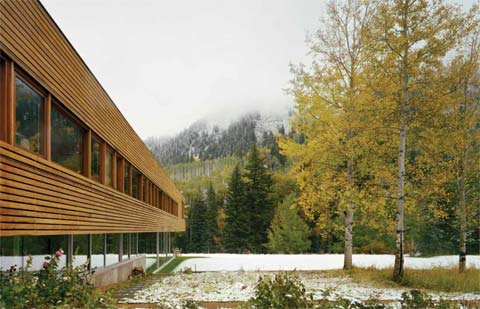
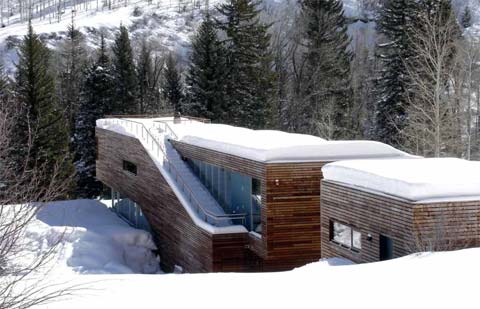
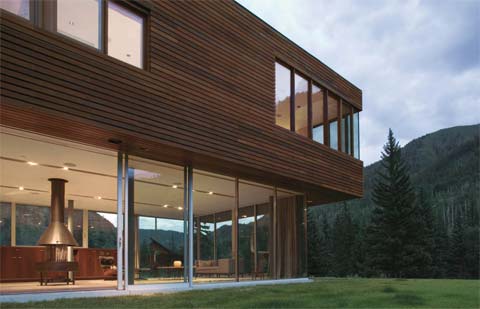
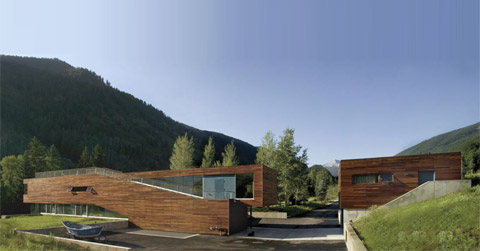
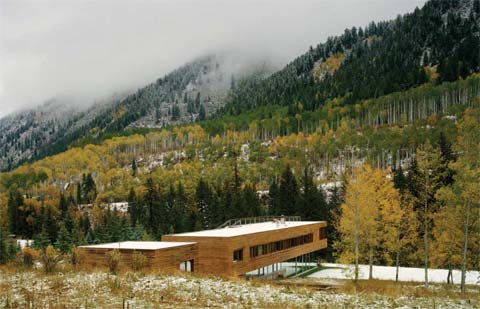
Located on a deep narrow valley in Aspen, Colorado, the Bar House endures extreme winters while the sun reaches the bottom of the narrow valley only from the south. 

Unlike surrounding houses, this unique structure, with its flowing linear shape, sits across the valley so each room could maximize the southern exposure combined with spectacular views of the valley.
modern-house-bar-4
modern-house-bar-5
modern-house-bar-3
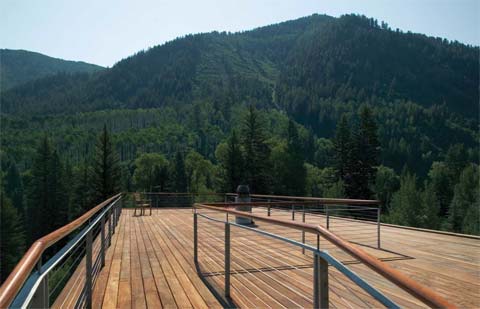
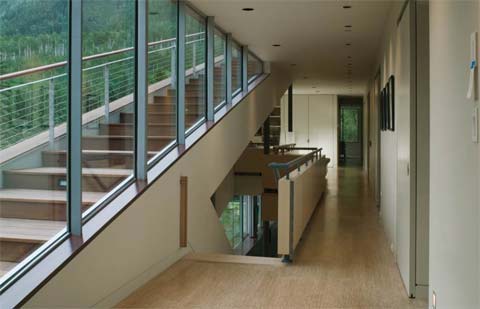
Bounded by a river on one edge and a road on the other, the house features an open-air roof-top terrace with an exterior staircase, overlooking magnificent views, while the bedrooms and the family room are located on the south side of the second floor.
modern-house-bar-6
modern-house-bar-7
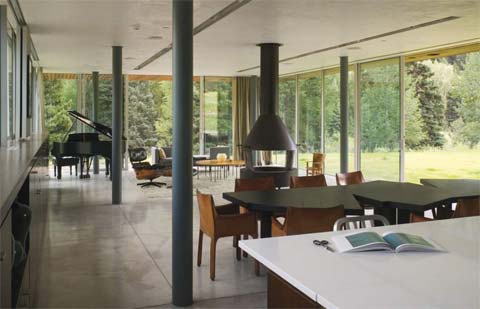
The living room on the ground floor has scenic views on three sides. A garage and guest apartment are located on the other side of the driveway, and an overhang of the house provides protection in inclement weather.
modern-house-bar-9
modern-house-bar-8

Bridge House: A Walk Among The Treetops

modern-house-bridge 
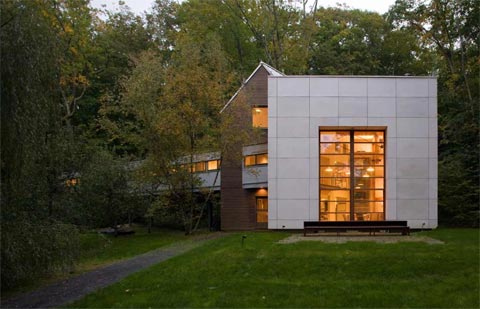
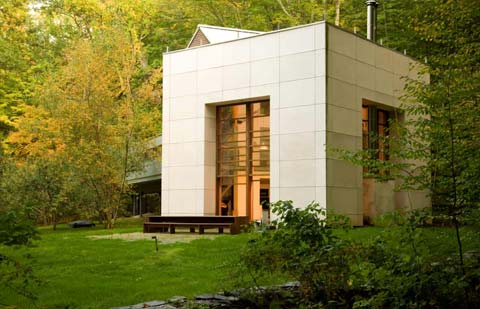
Located in Olive Bridge, NY, this modern house serves as a country retreat for an urban family. However, unlike any other typical vacation home, which is often simply a regular house built somewhere else, the architecture of this structure is bold and unusual both in space and form.
 
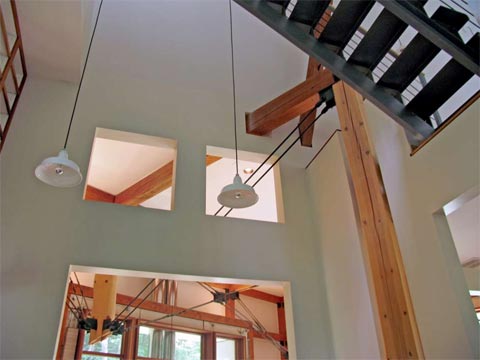
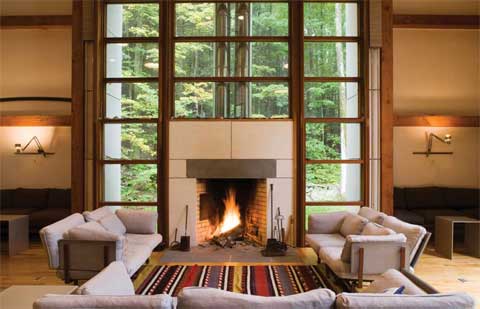
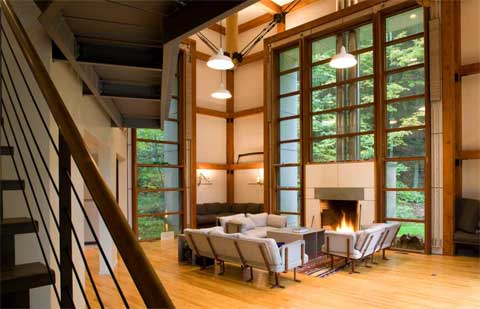
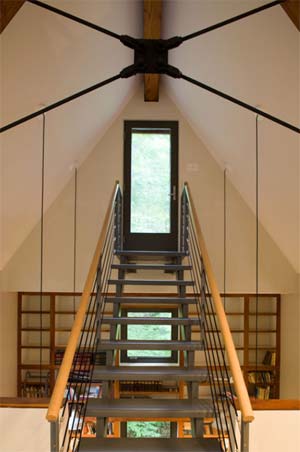
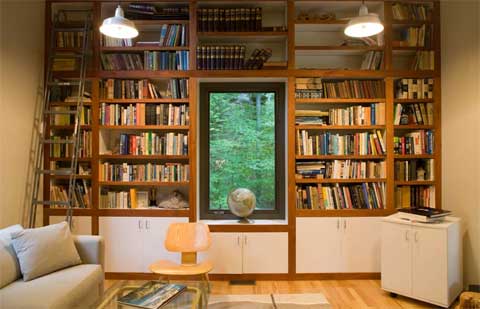
The central living room is simply striking, with its intricate post and beam structure and exposed metal cables, its overwhelming ceiling height and massive central fireplace.
modern-house-bridge-2
modern-house-bridge-1
modern-house-bridge-9
modern-house-bridge-8
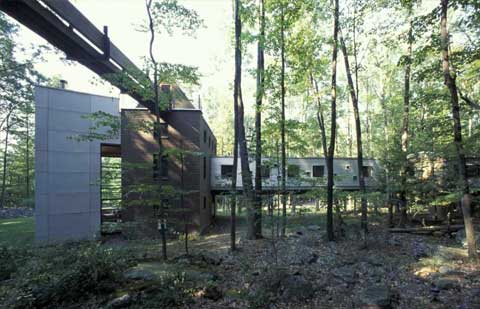
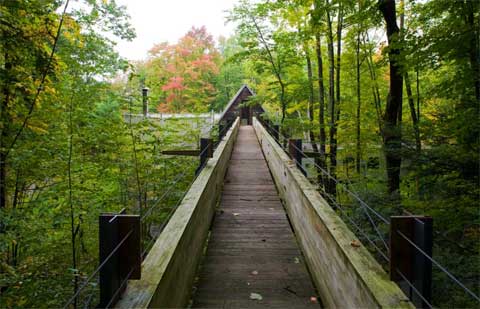
Two architectural elements stretch out from the main building; one is a linear structure that consists of several private quarters, and the other is a long and narrow bridge, extending from the top of the ceiling of the main building, inviting you for a walk among the treetops.
modern-house-bridge-6
modern-house-bridge-7
modern-house-bridge-5
modern-house-bridge-10

Prefab Home: Modular Green ECObitat

prefab-home-ecobitat 
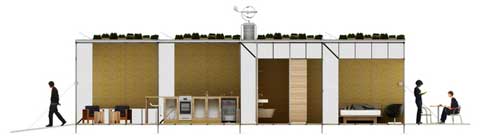
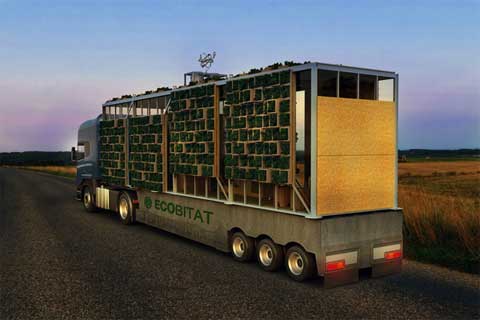
One of the things we love most is plunging deep into the world wide web to find aesthetically pleasing prefab designs. Here is an interesting project by Brazilian designer Felipe Campolina. It’s called ECObitat – a proposal for a prefabricated modular system that can be transported and scaled, defining various living spaces and multipurpose areas.

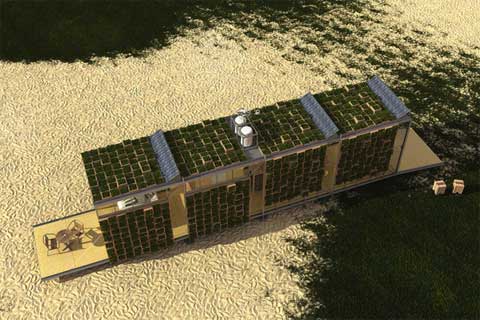
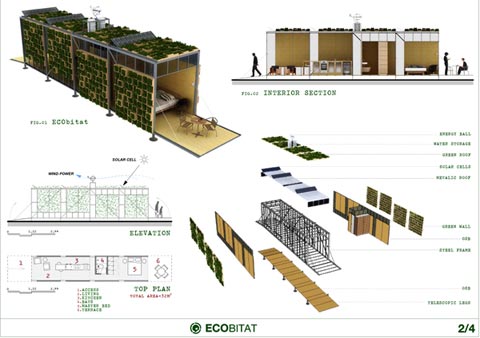
This prefab home features a steel framing construction, tempered glass windows, and vertical walls and floor in OSB (oriented strand board) with thermo-acoustic insulation. It stands on telescopic legs, offering a small footprint and high adaptability to different types of topographies.
prefab-home-ecobitat-2
prefab-home-ecobitat-3
The planning of the unit also includes environmentally sustainable features like solar panels for water heating, wind power to generate electricity as well as green roof and walls.
prefab-home-ecobitat-4

Interview: Cabin Fever

prefab-cabin-fever
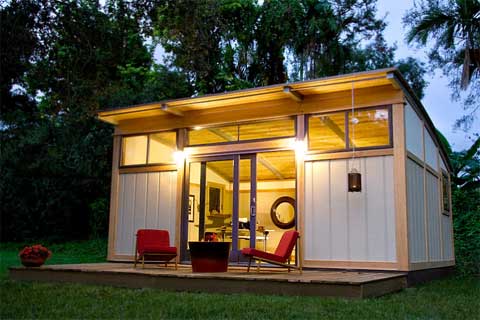
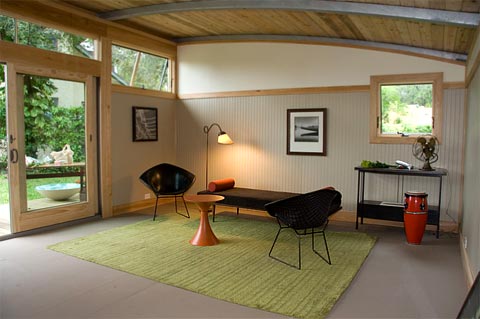
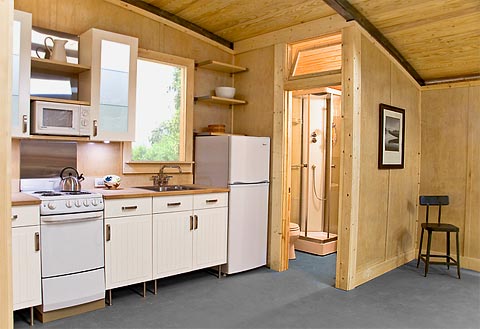
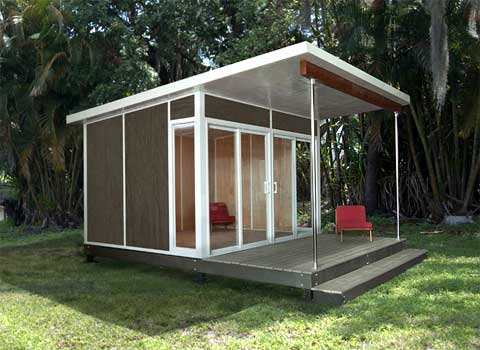
Whether you are looking for a home office, a granny flat, a weekend retreat, a small home or a commercial project, Miami-based company Cabin Fever creates well-designed, affordable, prefabricated cabins of natural beauty, quality, and style. We spoke to Andrew Kelly, Founder and CEO of Cabin Fever, and learned that for him, prefab building was a natural step.
What inspired you to get involved in prefab?
I was ready for a career change and looking for a challenge. My professional background is product design and manufacturing, something I have been working at for 25 years in the furniture industry – while looking for a prefab solution for a backyard office, I couldn’t find what I was looking for. The more I looked, the more I saw that there were opportunities to create a better product and a better way of doing business. I jumped right in and haven’t looked back.
Describe your approach to prefab design & construction?
We approach prefab as both a product and as architecture. The product design informs the external, the materiality and the manufacturability while the architectural design speaks to the rhythm, the function and human interaction with our products. A fundamental principal is to balance quality with cost at every step. Walking that edge, this is where the work is.
Can you tell us about the type of construction and materials you have chosen for your prefabs and why?
As we study the available materials and methodologies, one thing is clear. Wood, one of the oldest construction materials, is still one of the best; it offers performance and price. The advancements in engineered timbers and processed panels make it a good choice for many applications. The skill is choosing exactly the right material for the task (and there are hundreds to choose from). As a boat builder would use oak for a keel, teak for the decks and spruce for the masts. Similarly, we use a combination of natural and engineered forest products in the frames, the structures and the skins of our buildings. Wood is good, but we also embrace many other construction materials. We aren’t afraid to think outside the box, to reach out to other industries to find the perfect material for a given application.
For example we offer a 1-piece PVC membrane roof. This product isn’t well known in residential building – it’s a product for commercial roofs. Super strong, it performs well and it’s well priced; we think it’s a smart choice. Our work in developing Global Shelters has led us to jumbo engineered wood panels built for train and truck floors. These panels are used as 1-piece shelter walls. From the commercial refrigeration industry we have adopted durable, lightweight, and super insulating building panels. We use them in our Zip Cabin and our global product roofs.
prefab-cabin-fever-2
How important is sustainability and efficient design to you?
Sustainability is a complex subject. We have found that it’s easy to talk the talk, but not so easy to walk the walk – especially with ones wallet. Let’s face it – green isn’t cheap. Many of our customers, when given a choice, will not choose to spend more on a sustainable option. To steer our customers toward sustainability, our job is to offer only sustainable choices. However, it has to be incremental – one step at a time. We are taking these steps.
What would you consider to be the most challenging project, in terms of delivery and site adaptability?
In delivering a complete product, we must navigate the building department bureaucracies and their sometimes mindless rules and regulations. In response, we have developed our “no-permit” Zip Cabin. At 120 SF, its permit exempt in many localities. The pint-size Zip offers full-sized features such as an innovative wall and roof structure with integral raised floor foundation, and roofed deck.
We have had a few site challenges: A studio in Santa Monica for an international celebrity – they insisted in a maverick approach with no permits, very nerve racking. We built a music studio on a “gentle slope”. When our crew arrived, we found the building site 100 feet down a footpath at the bottom of a ravine. The slope was gentle, however the footpath down the hillside turned into a muddy slide as the 5-day build was carried out in the rain.
We are currently developing small “point-of-interest” hard-camps that will be used in Costa Rica. These small buildings will be delivered to almost inaccessible sites using pack mules. We will report back with these delivery stories.
What advice would you give to a potential homeowner interested in a prefab home?
  • When researching prefab manufacturers, remember that beauty is only skin deep…we all provide pretty pictures, find out about the nuts and bolts – what’s behind the walls?
  • There are 2 integral parts to a successful prefab installation: a good manufactured product, AND, a quality builder on the site to assemble it.
  • Prefab can deliver on the promise – a quality building at a good cost and with substantially less hassle than traditional construction. Do your homework and go for it!
prefab-cabin-fever-3
In your opinion, is the affordability of prefabricated homes a bit exaggerated or do you think prefab is the solution to low cost housing?
There is a lot of hype touting prefab as affordable housing; in the design magazines we all see prices of $300 – $400 per square foot. This is not a product aimed at a cost conscious market segment. Who than is serving this market? There are larger factories, filling (part of) this need. However, they are not targeting the “style” customer. There are just a few prefab builders focusing on style, quality and cost. This is the niche that Cabin Fever occupies.
Prefabricated modular apartment units, prefab student housing, and even prefab hotels are sprouting up across the globe. What are your thoughts about that?
When they are innovative, commercial prefab is carrying the movement forward in a very positive way. These projects sometimes employ the use of techniques and methodologies that are impractical with individual buildings and a smaller budget. This innovation trickles down. We can carry some of these solutions and ideas into our residential projects.
The future of prefab – Is it just a passing trend or is it here to stay?
There is a huge gulf between the boutique prefab builders and the well funded factories.
The factories need to become more hip and the smaller builders with the beautiful styling need to find a way to offer better value. When this happens, prefab will deliver on the on the promise made long ago – A better home for the people.
What’s new at Cabin Fever?
We are constantly evolving both our products and our building technology. For our fans that check in often, the change is incremental, it’s hardly noticeable. The subtle refinements are often in the materials that aren’t seen such as the waterproofing of our building envelope. One area that is out front is a switch from steel to laminated curved wood beams. While we liked the look and performance of the steel, wood is much easier on our assemblers in the field. The massive wood beams are a signature look to the Maxwell line.
As referenced above, we have added the ZipCabin. It was developed as a bolt-together smaller structure that is ready-to-use with fully finished interior and exterior surfaces.
prefab-cabin-fever-4
In developing the ZipCabin, the foundation was our first focus as it is here that a lot of money and time is spent in the field. We wanted a better solution. Our team designed a specialty piece of hardware. These proprietary connectors do double duty as frame connections and foundation risers complete with load bearing feet. This elegant solution takes 75% of the work out of foundation preparation. Needless to say, we are excited about this development and view it as the cornerstone of the next generation of Cabin Fever prefabs.
On our drawing board is an expansion of the ZipCabin line. Keeping the attributes of the Zip-Foundation and the fully-finished bolt-together construction, we are developing larger, livable models in several configurations.
2010 saw the devastating Haiti Earthquakes. We have developed shelters, housing and clinic structures for use in Haiti and other high-need areas. In addition, we have developed specific designs for Uganda and Gunea Bissau on the African continent. Our work with global solutions serves as a laboratory where we can bring new materials and technologies to our Cabin Fever products.
Prefab Cabin: Monte Rosa Hut Swiss Bliss

prefab-cabin-monterosa 
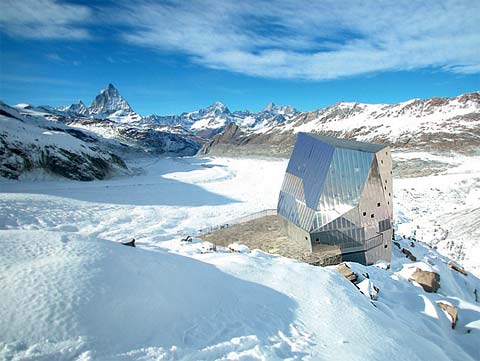
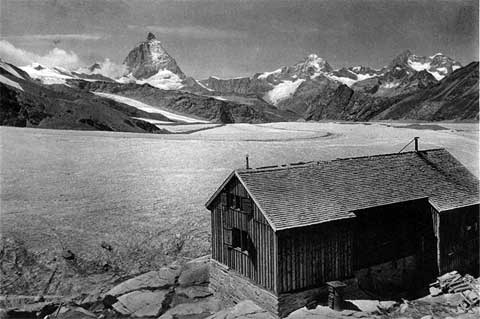
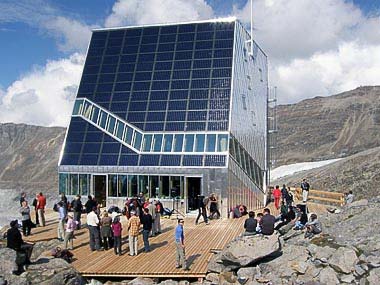
This amazing prefab cabin is situated on an exposed location on 2883 m above sea level, surrounded by unspoiled and spectacular scenery, nestled between Switzerland’s Gorner, border and Monte Rosa glacier.

A joint project of ETH Zurich, SAC, Hochschule Luzern – Technik & Architektur and EMPA, the new Monte Rosa Hut has replaced the original cabin, creating an example of an energy and environmentally sustainable architecture design.
prefab-cabin-monterosa-1
The structure, also known as the Rock Crystal, boasts a unique wooden shape with a shimmering silver aluminum shell, featuring solar photovoltaic panels and a water-saving system. Due to the challenges of topography, all timber elements have been prefabricated in a factory, then secured for transport to the site on helicopters (which also served as cranes), to be assembled on site.
prefab-cabin-monterosa-2
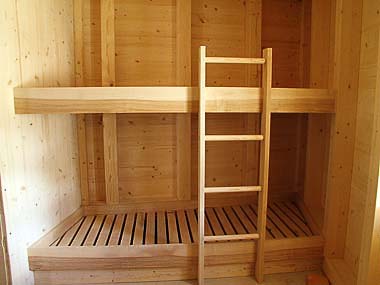
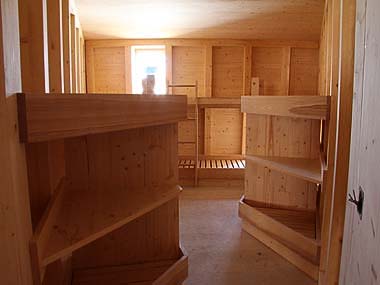
Although the exterior of the hut is sleek and metallic, the interior is a warm and cozy shelter, offering panoramic views of the stunning scenery and its bold and uninhibited nature.
prefab-cabin-monterosa-3
prefab-cabin-monterosa-4

Saitama House: A Small Modern Country Shed

japanese-house-saitama 
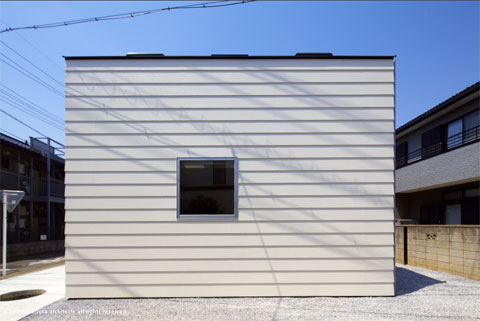
When viewed from one side, this wooden house in Saitama, Japan, looks like a country shed, with its simple box like design, white exterior and one small window that you simply cannot ignore.

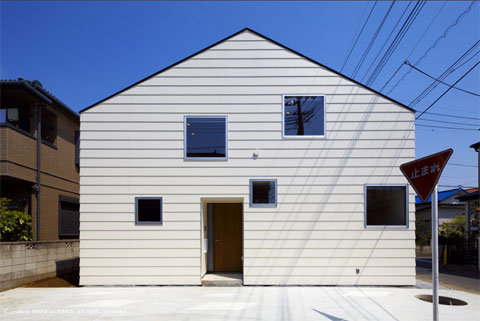
The front of the house is even more unusual where various sized windows are scattered at random.
japanese-house-saitama-2
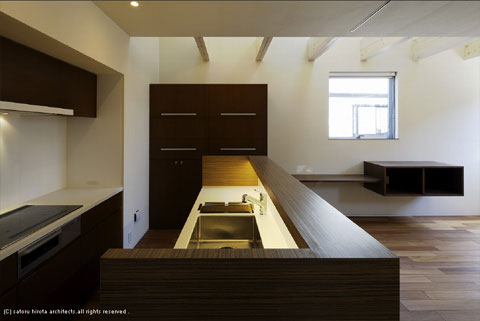
Designed by Tokyo-based Satoru Hirota Architects, this two-story home looks quite simple from the outside, however its interior design is a whole different story;
japanese-house-saitama-1
japanese-house-saitama-3
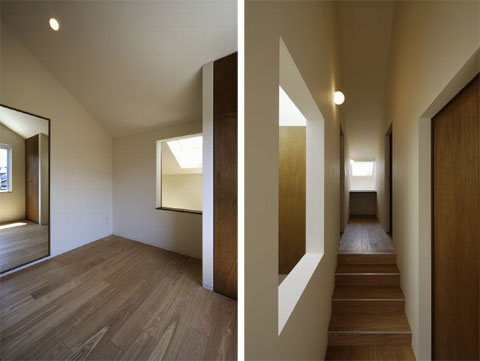
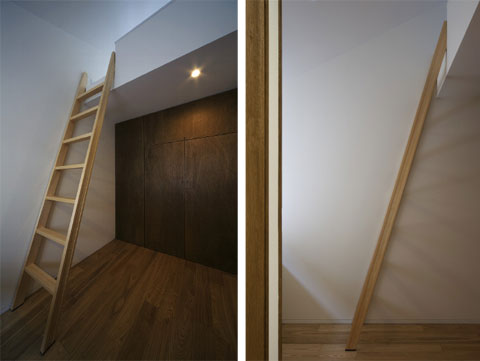
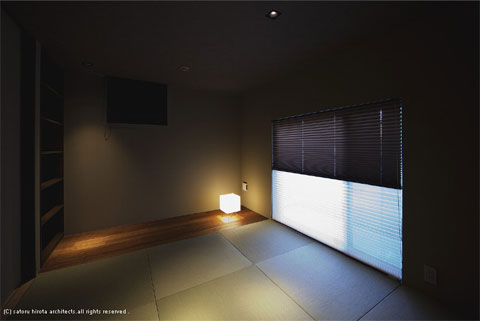
clean white walls and dark wood finish create a minimalist, modern look & feel, whereas randomly placed windows catch your eye, shedding natural light in unexpected angles.
japanese-house-saitama-4
japanese-house-saitama-5

Interview: Griffith weeHouse

prefab-home-griffith
Bill and Mary Griffith decided it was time to move out of their Dutch Colonial home and into their new weeHouse – a charming country prefab house, bordered by a stream on a quiet wooded lot in Cobleskill, NY.

Describe your weeHouse.
We started four years ago. We lived in a two family Dutch Colonial house on Main St. of Cobleskill, NY. It was getting time to move to the country for peace and quiet and for the privacy of our own home. We searched for land for nearly a year. We found the property of our dreams bordered by a stream, nearly all wooded, on a quiet country road. We started to think seriously abt. what type of house to build. We knew we wanted small. our apt. was only 900 sq. feet, but we wanted a house that had good quality and some flair and uniqueness.

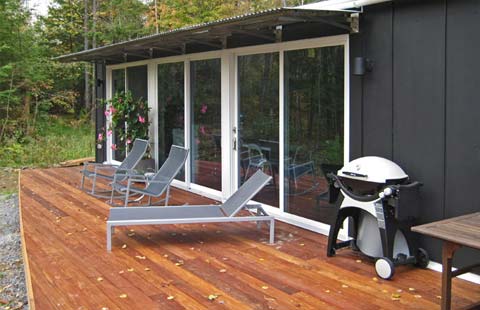
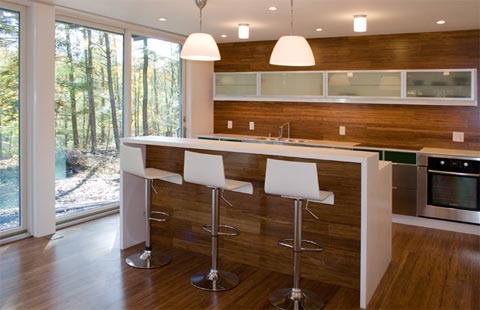
One day poking around on the web I saw a house designed by Alchemy Architects. It was a small red house in MN and my wife and I loved the design. I called Alchemy and we started a relationship. Right from the first call we felt that we were talking with people who understood what we wanted. We looked into other houses, local prefab, stick built, log cabins, but always came back to the Wee houses. Finally, one night we decided to take the plunge. We asked for a contract and signed it and sent in a deposit. The process was easy. We bought a house on the internet, making choices for options by looking at pix on the internet! We of course had phone conferences with Scott Erwin, the architect. We sent pix of the site, discussed options and decided on a two bedroom, 1100 sq. foot house. It is one floor and very open. There is a screened in porch and a deck. There are seven floor to ceiling patio door windows! Throughout there quality. Kohler, corian counter, bamboo floors, Anderson windows…
prefab-home-griffith-3
What inspired you to get involved with a prefab home?
Because we worked with Alchemy Architects we could get a beautiful and unique house that we could afford. We are not rich, but we were able to afford a house we love because it is prefab.
Are there any prominent features or benefits to living in a prefab?
Quality construction.
Are there any weak points you can think of to a prefabricated house?
no.
Can you tell us what made you choose Alchemy Architects?
They were creative, understanding, and have incredible integrity. They stand behind everything they do. The relationship was great. We were our own general contractors so as to save money and Alchemy was patient answering our questions and helping us through a process that was very involved. (We liked being so involved. It was very satisfying to be part of the process.) By the way, we worked with Scott Erwin. Scott came to the house set and then spent three days helping us paint, helping us put up the awning, directing the electrician and plumber, and many other things. He was simply amazing. He even helped with what color to paint the exterior and he helped my wife with furniture choices.
prefab-home-griffith-4
Let’s talk about the design & construction stages – Can you tell us about the process?
The design is described well at the Alchemy site, from price to design. It really is simple.
Can you tell us about the type of construction and materials you have chosen for your prefab and why?
We made choices from those that were available because we liked the colors. We got in floor radiant heat because it is nicer than forced hot air. But since we moved in we haven’t turned on the heat. We heat with wood that we cut on our land. The roof is rubber and appears flat. Since we’ve moved in we have had solar and PV installed on the roof. We have an unfinished basement that is walk in. It is such a great place for storage and projects. We store our canoes down there. Oh, I forgot. My wife wanted three things: a screened in porch, an entryway, and a utility sink. The sink is downstairs in the cellar, the entryway has built in closets and tile floor, and the porch is right off the living room with ipe flooring and a fan. It is her favorite spot in the summer, spring and fall.
How important is sustainability and efficient design to you?
Very, the house is small, the bamboo floor is sustainably harvested, we heat with wood I cut on our land, we have solar electric and water.
In your experience, is there any difference living in a prefab compared to a conventional house? In terms of green living, practicing sustainability, etc.
I think there is less waste in prefab construction.
In your opinion, is the affordability of prefabricated homes a bit exaggerated or do you think prefab is the solution to low cost housing?
Our house is small and affordable for us, but it would be expensive for many in our county.
What would you consider to be the most challenging point in the project?
Making the choice to finally “take the plunge”. Once we decided on Wee house we were happy and enjoyed the process and love our house.
What advice would you give to a potential homeowner interested in a prefab home?
Work with people you trust, if you think there is something you want in your house, try hard to figure it out. We have NO regrets about our house and the process.
prefab-home-griffith-2

Prefab Cabin for the Permanent Campe

prefab-cabin-mudgee 
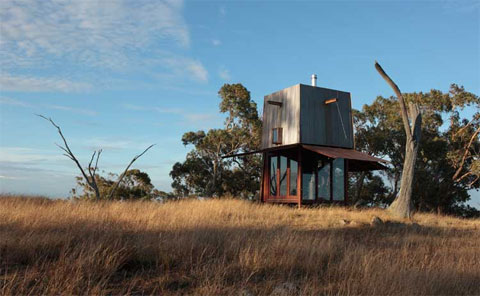
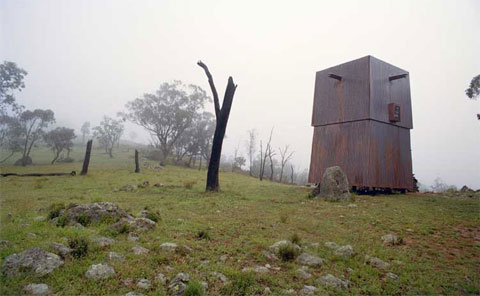
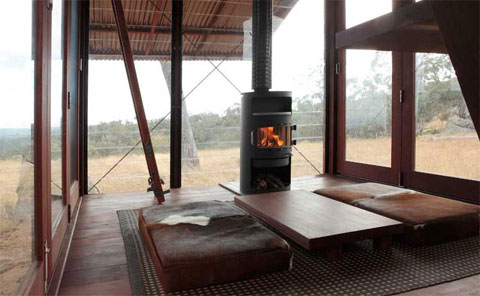
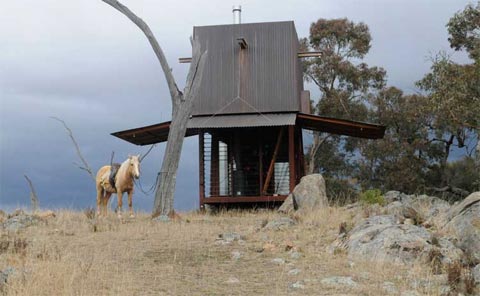
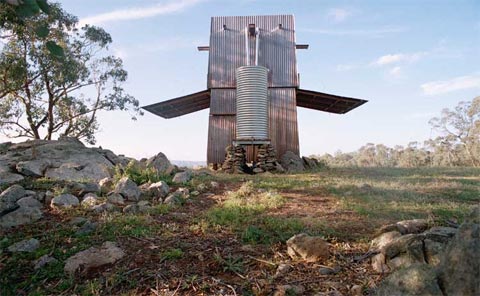
If this unique piece of architecture doesn’t stop you right there, then I don’t know what will. It’s actually a small 3 x 3m prefab retreat, hidden inside a copper clad tower, offering panoramic views to the horizon. Featuring a rusty cube-like design with basically simple amenities, this house is referenced as ‘Permanent Camping’.

It’s location is also quite unusual; an isolated pristine mountain on a sheep station in central western NSW, Australia. Since the site is so remote, the building was completely prefabricated in Sydney, then transported and erected on site.
 prefab-cabin-mudgee-1
This mountain getaway is surrounded by large granite boulders and ancient dead trees, looking almost haunted, as if they were just taken from a movie set.
prefab-cabin-mudgee-2
Look how the sides of the tower open up on the ground level living room, creating an extended viewing platform and allowing free air movement. When not in use, everything closes down completely.
prefab-cabin-mudgee-5
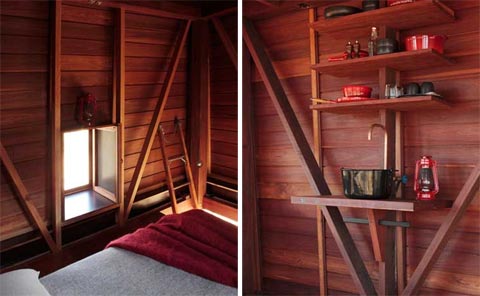
This two-storey vacation home is highly insulated, protected from extreme weather. It includes a sleeping loft and a tiny kitchen, whereas the toilet is located in a closed unit a short walk away.
prefab-cabin-mudgee-4
Water is collected from the roof into a large water tank on the south side of the tower.
prefab-cabin-mudgee-6

Schröder House: 1920s Modernism

modern-house-schroder

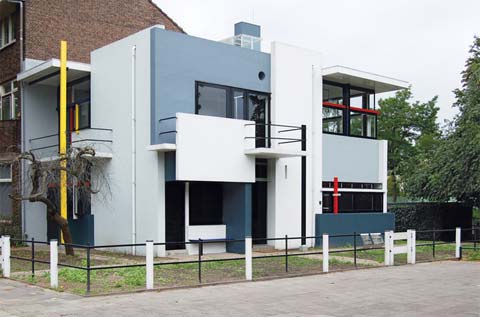
With the Centraal Museum in Utrecht celebrating the work of Dutch architect and designer Gerrit Rietveld, we’ve decided to take a quick look at his famous Schröder House. Considered an icon of the Modern Movement in architecture, to me the Rietveld Schröderhuis is an architectural manifestation of the purity of graphic design and stylistic modernity.

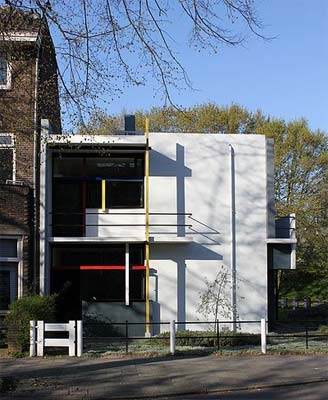
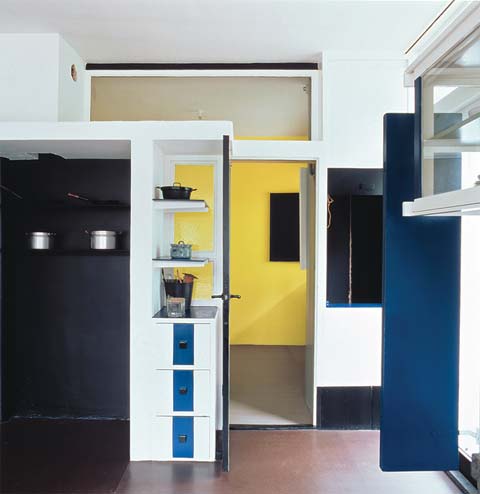
Consisting of two floors, a small garden, two terraces and a flat roof, the striking external appearance of the house was created to be a painting in three dimensions.
 modern-house-schroder-2 
It was originally designed for Truus Schröder in 1924, where today it is considered a UNESCO World Heritage site and is often described as the first truly modern building.
 modern-house-schroder-3
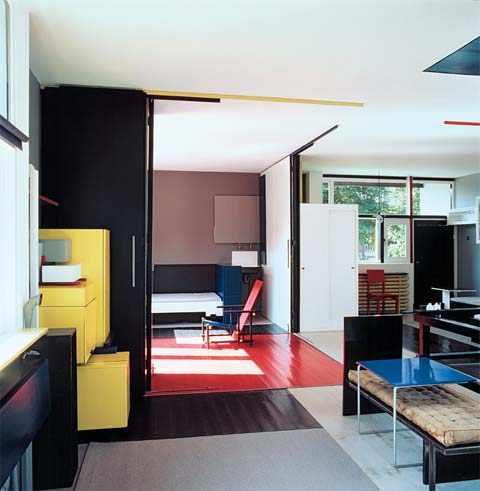
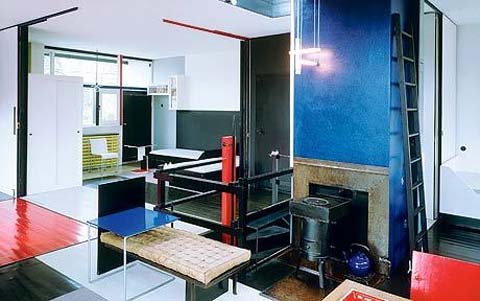
The interior includes an open-plan living and sleeping areas, with an ingenious system of folding screens, which disappear into the walls when not in use, allowing the space to be sectioned off into private spaces.
modern-house-schroder-4
“According to Rietveld and Schröder one had to have an active attitude to life. …The furnishing of the house reflects this conviction. The occupant has to perform a transaction for every activity: the bathroom is created by opening out a wall, while the sleeping areas could be screened off with sliding walls, and privacy was obtained by placing shutters in front of the windows. The house is literally a machine for living in.”
modern-house-schroder-5
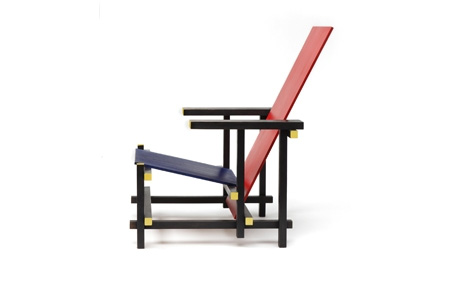
Gerrit Rietveld, a member of the De Stijl movement, is well known for his basic cubist elements, primary colors, and for his classic Red-Blue chair.
modern-house-schroder-6